

AI Is Moving Fast — Is Your Company Ready to Keep Up?
AI technology is advancing at a pace that was hard to imagine just a few years ago. The model considered most cutting-edge today could soon be overtaken by something even more capable…

The Generative AI Tsunami
AI technology is advancing at a pace that was hard to imagine just a few years ago. The model considered most cutting-edge today could soon be overtaken by something even more capable. Google, for instance, recently released Gemini 3, with strong capabilities across text, text-to-image, and more. Large Language Models (LLMs) are no longer limited to handling text—they can now generate video, audio, and even visuals for business needs. In other words, GenAI's potential in the workplace just keeps expanding.
At this point, models like GANs (Generative Adversarial Networks) and diffusion models have already become part of mass adoption across industries. From marketing and HR to training and operations, AI is touching almost everything.
IDC's 2024 report shows that global AI adoption jumped from 55% in 2023 to 75% in 2024. Enthusiasm for learning GenAI is just as visible: GenAI course enrollment on Coursera grew 195% year-on-year to more than 8 million learners. By 2025, nearly 700 GenAI courses were averaging 12 enrollments per minute—a dramatic jump from just 1 enrollment per minute in 2023.
GenAI's entry into the workplace is driving change in two directions at once: automation and augmentation. On one hand, GenAI is projected to automate up to 30% of work hours in the United States by 2030. Administrative tasks, basic data processing, and standard content creation will increasingly be handled by machines. On the other hand, GenAI is also strengthening the human role in complex tasks—strategic decision-making, planning, and creative ideation among them.
This is where a major skills shift is taking place. Today's workplace now demands two sets of competencies that need to develop side by side:
- Hard Skills Things like prompt engineering, MLOps, AI ethics, data science, and emerging roles such as Generative AI Engineer.
- Soft Skills Things like critical thinking, complex problem-solving, creativity, emotional intelligence, and leadership.
What's striking is that AI skills are no longer exclusive to IT teams. As of May 2024, 66% of global executives said AI skills have become a requirement for new non-technical hires. The expectation is often fairly simple: being able to use basic tools like ChatGPT effectively. It's no surprise that demand for GenAI skills in non-technical roles has surged by 800% since late 2022.
The Strategic Role of HR & L&D Amid AI Disruption
Amid such rapid GenAI adoption, the role of HR and Learning & Development has become increasingly strategic. HR and L&D now sit at the front line of corporate skills transformation, determining whether an organization merely uses AI, or genuinely turns AI into a competitive advantage.
The biggest challenge lies in building a skills-development roadmap that's both relevant and sustainable. Teaching employees how to use tools like ChatGPT, Copilot, or other AI platforms is a necessary fundamental. But a new mindset—how employees can work alongside AI—also needs to be part of the equation.
Learning strategy inevitably has to adapt too. One-way, classroom-style instruction is falling further behind. Companies need to push toward practice-based learning, simulations, real-world case studies, and microlearning that can be accessed anytime. This is where technology—digital learning and interactive formats in particular—plays a major role.
Even before the AI disruption, mainstream social platforms like YouTube, Instagram, and TikTok, along with e-learning platforms such as LinkedIn Learning, Coursera, and Inspigo, were already offering plenty of microlearning video. LinkedIn Learning alone offers more than 22,000 courses to cover a wide range of L&D needs, from upskilling and reskilling to management development.
The rise of GenAI is pushing L&D divisions to design training programs that are more targeted and more impactful. AI can help analyze the data a company has already gathered, but deciding which skills to prioritize still requires human sensitivity to organizational dynamics.
This is where content curation becomes critical. L&D needs to act as a curator, sorting out what's actually relevant to the company's context. Content that's too generic often falls flat unless it's translated into real case studies and real workplace challenges.
On top of that, learning approaches are becoming increasingly personal. With the help of technology, including AI, companies can now design a learning journey that's more adaptive to each employee's role, job level, and performance. A supervisor naturally needs a different approach than an individual contributor. This kind of personalization is what makes learning genuinely resonate.
Having worked on more than 1,000 learning multimedia projects, Monkey Melody understands that every company faces different challenges and has different goals. That's why we offer a tailored approach to ensure every video we produce achieves its intended training objective. By combining the latest technology with a creative approach, we're ready to help your company meet the training challenges of the future.
More insights
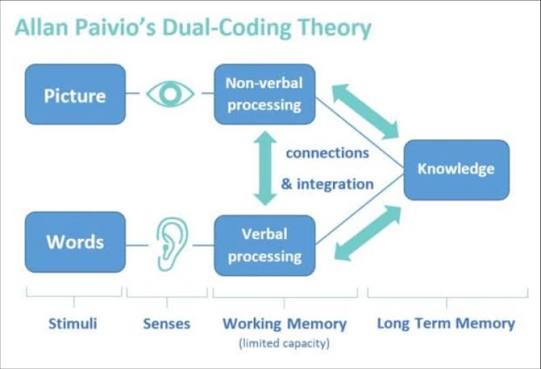
Research on Interactive Video Among Biology Students
The use of video as a self-paced e-learning medium has become standard practice in corporate training programs and higher education.
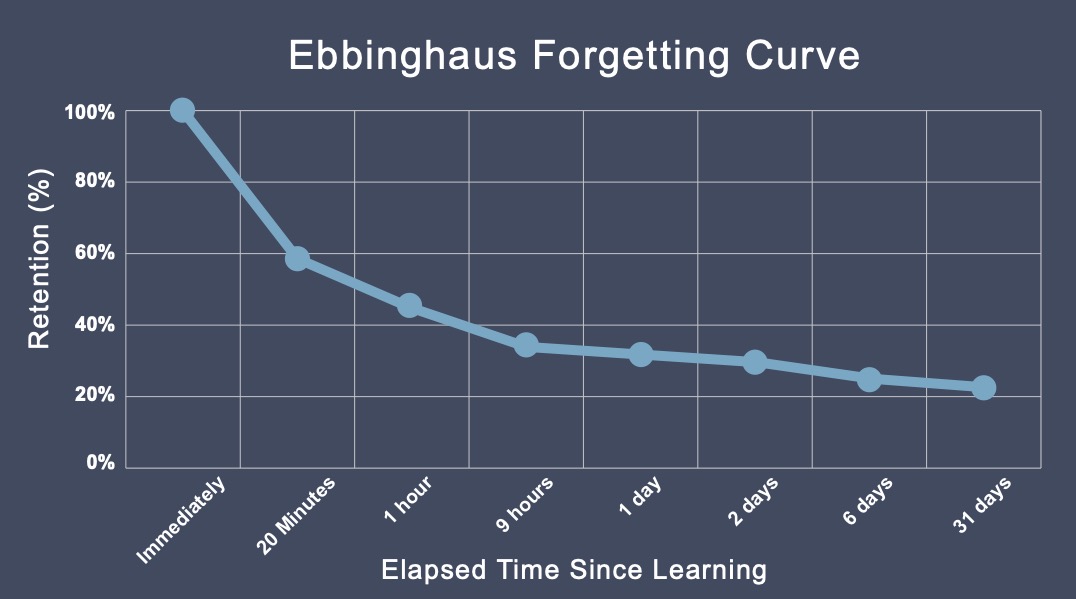
The Science Behind Why Microlearning Works
A single long training day often fails because it fights how the brain actually works — see how microlearning, the Forgetting Curve, and spaced repetition make material actually stick.
How AI Video Search Is Transforming Corporate L&D
Thousands of hours of training video pile up in your company's LMS, hard to search once a program ends — see how AI Video Search is changing the way L&D teams find specific moments buried in that dark data.
Want the short version, applied to your company?
Let's talk about what this means for you.
Get in touch