
A Smart Way to Repurpose Your Webinar Recordings
In a training program, companies typically run seminars both offline and online. Webinars in particular, being easier and cheaper to organize, tend to happen more often…

Webinar Recordings Are an Overlooked Opportunity
In a training program, companies typically run seminars both offline and online. Webinars in particular, being easier and cheaper to organize, tend to happen more often. Unfortunately, these webinar recordings are rarely put to good use.
According to data from Contrast, more than 60 million webinars are projected to take place globally by 2026. Yet most of those recordings end up as passive video files that are rarely touched again. Research shows that repurposing a single webinar recording can cut costs by 75 to 90 percent compared with producing new content from scratch.
There are three strong reasons why repurposing webinar recordings is a smart strategy for L&D teams.
First, the cost efficiency is significant. Data from Webinar.net shows that repurposing webinar content costs only about 10 to 25 percent of producing equivalent new content. Contrast reports that using AI for repurposing saved more than 13,000 work hours in 2024 alone — equivalent to roughly USD 650,000 in savings. For every webinar repurposed, teams saved 4 to 10 hours of work.
Second, the reach potential is far greater. A case study published by Webinar.net found that a single webinar with 200 live attendees generated 52 distinct content assets within three months — ranging from 15 social media videos, 8 blog articles, and 12 infographics, to one complete mini-course. As a result, their website traffic grew by 340 percent.
Third, there's the reality of modern employees' time. Research from Bersin by Deloitte found that employees have only about 1 percent of their work week available for learning activities. In a context like this, short learning videos produced from repurposed webinars can significantly boost efficiency.
From Recording to Short-Form Video
Not every part of a webinar deserves to be repurposed. We need to be selective about which segments are genuinely high-value and can stand alone as learning content.
Start with a content audit. Rewatch the webinar recording and look at metrics such as points with high engagement during the live session, which parts are most relevant to the material, and so on.
Segments worth repurposing usually have a clear, specific learning objective. They should be understandable on their own, without needing to watch the entire webinar. And ideally, the content should still be relevant several months down the line.
A landmark study from MIT and edX that analyzed 6.9 million viewing sessions from 128,000 students found one very clear pattern: the most effective learning videos run 6 minutes or less. Beyond that point, median engagement time plateaus at around 6 minutes.
Data from LinkedIn Learning confirms the same pattern in a corporate context. Courses under 5 minutes recorded a 74 percent completion rate. Courses over 15 minutes? Completion rate plunged to just 36 percent. The gap is stark.
This means a 60-minute webinar can be broken down into 8 to 10 short segments, each running 5 to 7 minutes. And based on the data above, each short segment can hold learners' attention far better than one long webinar video.
This kind of microlearning format has also been shown to improve knowledge retention. Research shows that microlearning can increase retention by 25 to 60 percent compared with traditional methods. Organizations that adopt microlearning also report engagement and productivity gains of up to 130 percent.
After producing more than 1,000 learning multimedia projects, Monkey Melody understands that every company faces different challenges and goals. That's why we offer a tailored approach to ensure every video we create achieves the intended training objectives. Using the latest technology and a creative approach, we're ready to help your company tackle the training challenges of the future.
More insights
Research on Interactive Video Among Biology Students
The use of video as a self-paced e-learning medium has become standard practice in corporate training programs and higher education.
The Science Behind Why Microlearning Works
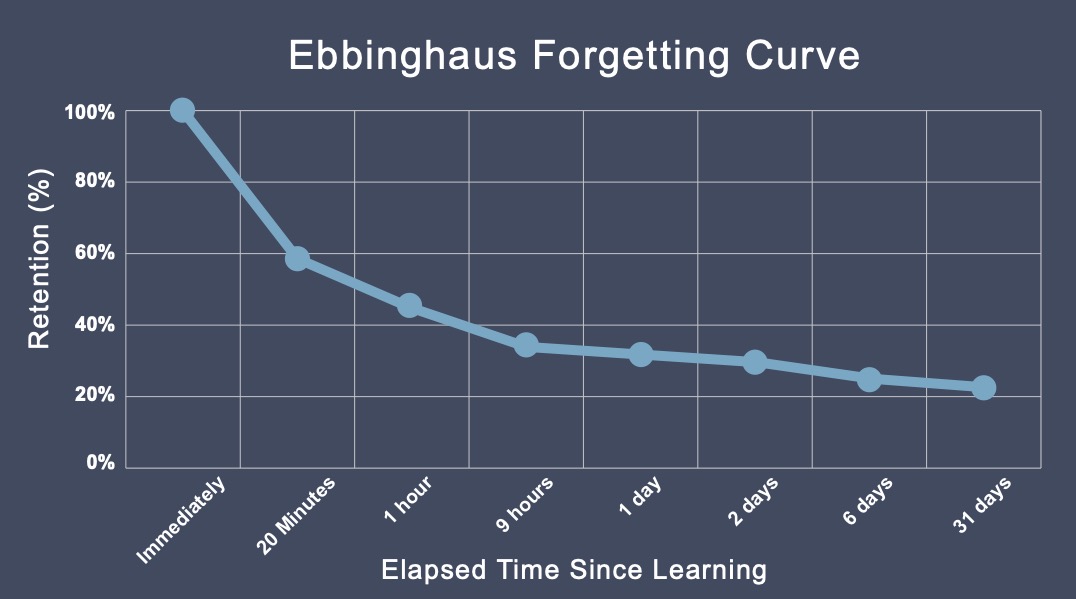
A single long training day often fails because it fights how the brain actually works — see how microlearning, the Forgetting Curve, and spaced repetition make material actually stick.
How AI Video Search Is Transforming Corporate L&D
Thousands of hours of training video pile up in your company's LMS, hard to search once a program ends — see how AI Video Search is changing the way L&D teams find specific moments buried in that dark data.
Want the short version, applied to your company?
Let's talk about what this means for you.
Get in touch