

GenAI Does Speed Up Production — But Is It Actually Effective?
According to research from McKinsey, around 65% of organizations have now adopted generative AI in their business operations, with most chasing time efficiency and speed…

Speed vs. Learning Effectiveness
According to research from McKinsey, around 65% of organizations have now adopted generative AI in their business operations, with most chasing time efficiency and speed. In the L&D industry, a global trends report from Thomson Reuters also shows that nearly half of professionals have started using AI to help draft content or summarize thick technical guide documents.
Interestingly, though, that same report also reveals that only about 20% of organizations measure the return on investment (ROI) of this technology. So there's clearly an excessive focus on speed without assessing whether the impact is actually good or bad.
We need to recognize that technological speed doesn't automatically match biological speed. The human cognitive system has its own speed limit for processing, connecting, and storing new information into long-term memory. When we feed employees a mass-produced, rapid-fire stack of learning videos, we're really just creating an illusion of competence.
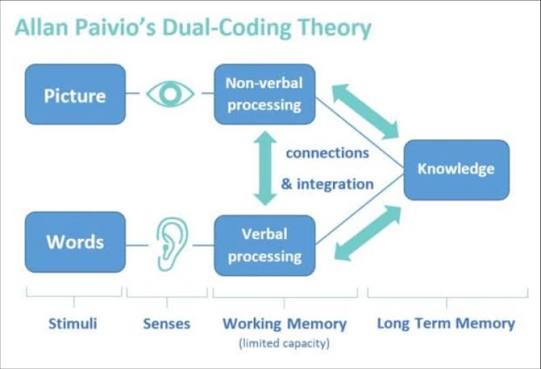
To understand why this happens, we need to look at the Cognitive Theory of Multimedia Learning, formulated by Richard E. Mayer. This theory explains that the human brain processes information through two separate channels — visual and verbal — and both have very limited capacity.
When video elements like scripts, storyboards, and visual assets are produced entirely by AI without deep curation, the result can feel generic and potentially inaccurate. GenAI is good at stringing together words that sound accurate, but hallucination can still occur.
If we only focus on cutting production time without considering how well information actually gets absorbed, the learning objective won't be achieved properly. We need to put AI technology back in its place as an accelerator for early drafts, while full control over instructional design stays in human hands.
How to Work Around AI's Limitations
To keep your company's AI investment from ending up as a pile of unwatched learning videos, here are a few tactical steps we can take to filter and refine AI-generated scripts:
- Use AI to Generate Scenario Variations, Not a Final Script. Don't accept AI's first draft outright. Ask the AI to produce 3-4 alternative problem-solving scenarios from the same material. Use GenAI to produce options, then pick the scenario that most closely matches the real challenges on the ground.
- Simplify Stiff Language with a Conversational Approach. AI often reaches for wording that's too formal or roundabout. Do a manual editing pass to make the language fit the audience better, using short sentences that are easy to follow when heard aloud (Mayer's personalization principle).
- Validate Local Context with a Subject Matter Expert (SME). AI will only understand context specific to your company once it's given the relevant information. SME curation is critical for aligning the script with actual policies, the technical terms commonly used in your workplace, and locally relevant case studies.
- Turn Text Structure into a Visual Guide (Storyboarding). In producing an animated learning video, the script isn't just voiceover narration — it also includes visual direction. The instructional designer's job is to map out where illustration, motion graphics, or text should appear to reinforce the spoken words, so learners' eyes and ears focus on the same information at the same time.
By combining the speed of generative AI in the early creative stages with the sharp analysis of human instructional designers at the curation stage, your company can strike the right balance between learning modules that are quick to produce and modules that genuinely improve employee performance.
After producing more than 1,000 learning multimedia projects, Monkey Melody understands that every company faces different challenges and goals. That's why we offer a tailored approach to ensure every video we create achieves the intended training objectives. Using the latest technology and a creative approach, we're ready to help your company tackle the training challenges of the future.
More insights
Research on Interactive Video Among Biology Students
The use of video as a self-paced e-learning medium has become standard practice in corporate training programs and higher education.
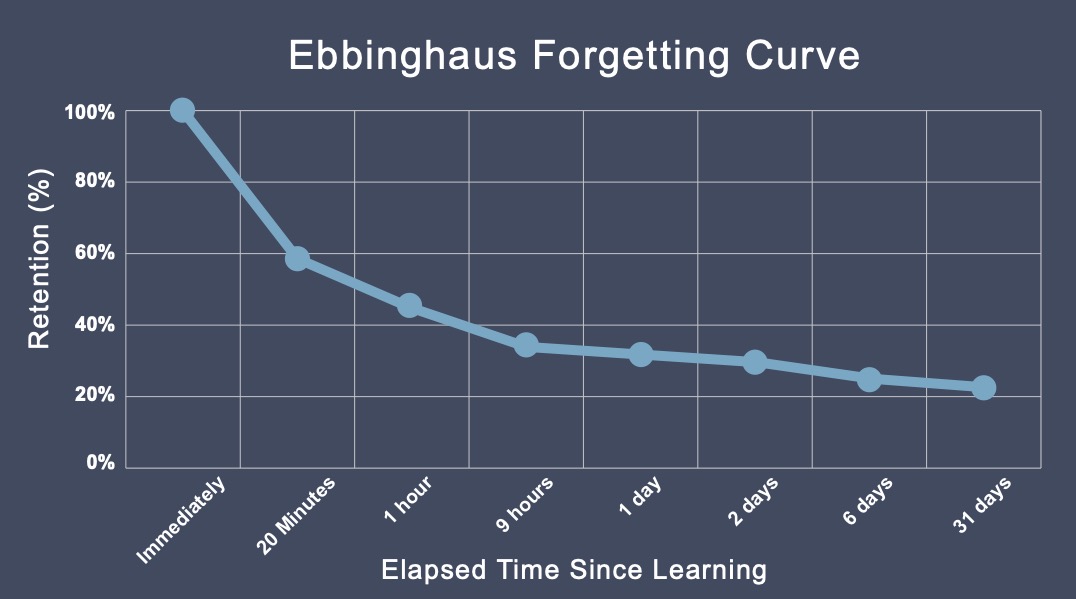
The Science Behind Why Microlearning Works
A single long training day often fails because it fights how the brain actually works — see how microlearning, the Forgetting Curve, and spaced repetition make material actually stick.
How AI Video Search Is Transforming Corporate L&D
Thousands of hours of training video pile up in your company's LMS, hard to search once a program ends — see how AI Video Search is changing the way L&D teams find specific moments buried in that dark data.
Want the short version, applied to your company?
Let's talk about what this means for you.
Get in touch