
Remember: Your Brain's Working Memory Has Limits
Companies often assume that a failed training program comes down to low employee motivation or dull foundational material. As a result, the fix usually…

What Is Working Memory?
Companies often assume that a failed training program comes down to low employee motivation or dull foundational material. As a result, the fix is usually limited to piling on flashier visuals.
Unfortunately, this approach tends to create a new problem: mental fatigue. Learners become overwhelmed, bombarded by too much visual and audio stimulation at once. Why does this happen? It turns out that when the human brain processes new information, that information isn't absorbed automatically. We need to understand the principle of working memory.
John Sweller, a leading figure in educational psychology, makes an important point about the architecture of the human mind in his book Evolution of Human Cognitive Architecture (2003):
"Working memory is the seat of consciousness; it is the processing engine of our entire cognitive system."

If we compare it to technology, working memory works a lot like the RAM in a computer or smartphone — a temporary storage space that's quite small and limited. This working memory is both the main gateway and the processing engine for every new piece of information coming in, before it's eventually filtered and transferred into long-term memory.
When a learning design isn't built around an understanding of this biological limitation, cognitive load piles up very quickly. Picture a computer forced to run several heavy programs at once — its system is bound to slow down, or even freeze completely.
Something similar happens to an employee's brain. When mental load exceeds working memory capacity, the transfer of knowledge into long-term memory gets disrupted. Valuable information from the training simply passes through without leaving any lasting understanding.
How to Reduce Cognitive Load in Video Design
Given these limits on human cognitive processing, at Monkey Melody we focus on producing learning videos that align with each company's specific objectives. By understanding the objective clearly, we can choose the most effective concept rather than applying the same visual approach to every project.
Ultimately, a learning video that succeeds in a corporate environment is one that delivers its message as efficiently as possible without triggering mental fatigue in the audience.
At Monkey Melody, our instructional designers and visual designers work together from the earliest stages of concept development to carefully weigh every element that goes on screen. Our approach focuses on minimizing extraneous cognitive load. We make sure employees' mental energy isn't wasted on unimportant decorative elements, but goes entirely toward absorbing the core training material that supports their day-to-day work.
So what are the concrete steps for managing this cognitive load so information sinks in far more effectively? Here are three practical methods we can apply right away when building corporate training videos:
-
Apply Chunking (Segmentation) Don't force employees to sit through a 30-minute explainer video without a break. Break large material down into a series of short videos, or microlearning segments of 3 to 5 minutes, each focused on one specific sub-topic. This technique gives working memory time to process information in stages before moving on to the next concept.
-
Balance the Audio and Visual Channels The brain processes visual and audio information through two separate channels, each with its own limited capacity. Avoid displaying long on-screen text that says exactly what the voice-over narrator is saying out loud. That kind of overlap only confuses the brain. Instead, show visuals — illustrations, diagrams, or key points — on screen, and let the narrator's voice explain the meaning out loud.
-
Filter Out Non-Essential Information Cut every extra detail that doesn't support the core learning objective. Overly dramatic sound effects, background music that's too loud, or excessive transition animations might look impressive, but they're all distractions that eat into an employee's working memory capacity. Build visuals that stay focused and go straight to the core procedure.
Because information is retained properly in long-term memory, employees' knowledge retention becomes far stronger. This has a direct impact on raising standards out in the field.
Having produced over 1,000 learning multimedia projects, Monkey Melody understands that every company faces its own distinct challenges and goals. That's why we offer a tailored approach to make sure every video we produce achieves the intended training outcomes. Using the latest technology and a creative approach, we're ready to help your company meet the training challenges of the future.
More insights
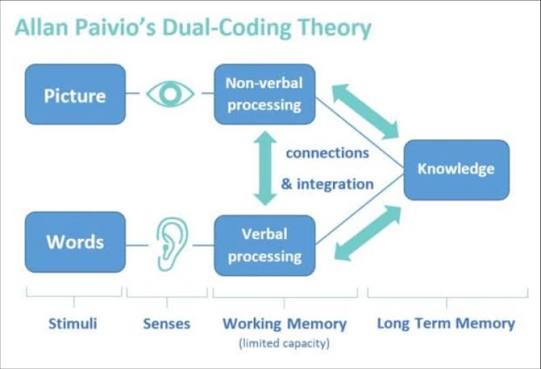
Research on Interactive Video Among Biology Students
The use of video as a self-paced e-learning medium has become standard practice in corporate training programs and higher education.
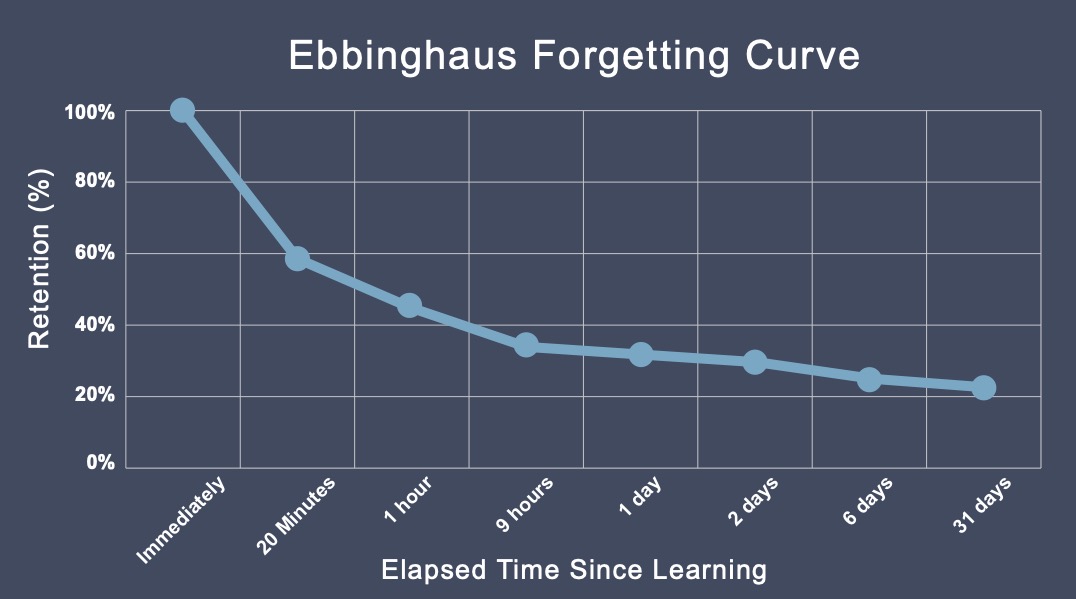
The Science Behind Why Microlearning Works
A single long training day often fails because it fights how the brain actually works — see how microlearning, the Forgetting Curve, and spaced repetition make material actually stick.
How AI Video Search Is Transforming Corporate L&D
Thousands of hours of training video pile up in your company's LMS, hard to search once a program ends — see how AI Video Search is changing the way L&D teams find specific moments buried in that dark data.
Want the short version, applied to your company?
Let's talk about what this means for you.
Get in touch