
Overcoming Cognitive Overload with the Right Mix of Audio and Visuals
Amid the rising trend of video learning for employee training, many companies focus too heavily on aesthetics and cram in too much content. The result: we often see videos…

Why Overloading a Video with Elements Can Hurt Learning Effectiveness
Amid the rising trend of video learning for employee training, many companies focus too heavily on aesthetics and cram in too much content. The result: we often see learning videos that flood the screen with busy visuals and long blocks of explanatory text. This approach actually triggers a problem called cognitive overload, where the audience's working memory gets overwhelmed from being forced to process too much information at once.
This is where the Modality Principle matters. Popularized by Richard E. Mayer in his book Multimedia Learning, this principle holds that people learn far more effectively when verbal information is delivered as spoken narration rather than on-screen text. Let's dig into why this principle is so powerful, and how you can apply it to build better learning videos.

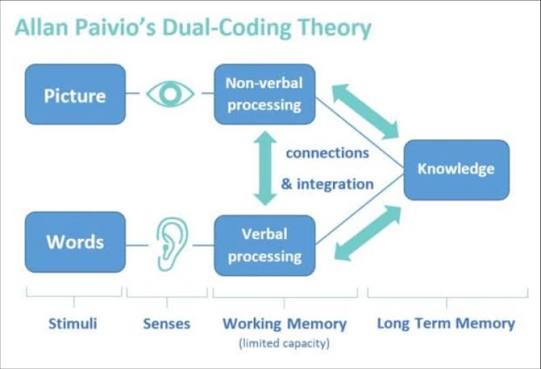
To understand the Modality Principle, we first need to look at how the human brain processes information, through Dual-Coding theory. Humans have two independent channels for processing short-term memory.
The first is the visual channel, which processes visual information such as images, illustrations, animation, and written text. The second is the auditory channel, which processes information in audio form.
When a video shows a complex animated diagram while simultaneously displaying a long paragraph of text underneath it, the two elements end up competing for space in the visual channel. The viewer's brain is forced to jump back and forth between reading the text and watching the animation. The result: their concentration splits, and comprehension can drop.
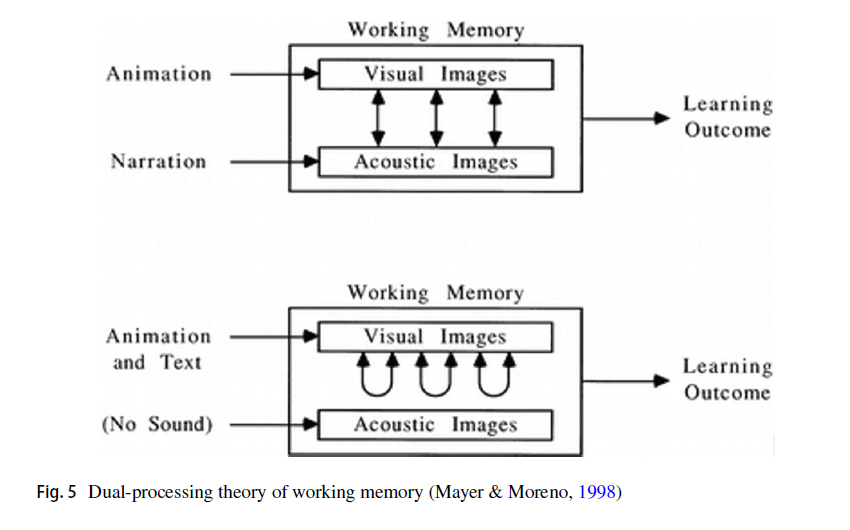
The opposite happens when that long text is converted into voice-over narration instead. The cognitive load shifts from the visual channel to the auditory channel (modality off-loading). The eyes stay focused on the graph's movement, while the ears absorb the explanation's details. Across 17 rigorously conducted experiments, Richard E. Mayer found that participants who learned through a combination of animation plus audio narration consistently scored far higher on tests than the group that learned through animation plus on-screen text. The study recorded an effect size of d = 1.02, a number that demonstrates just how massive this intervention's impact is on human comprehension.
How to Apply the Modality Principle
Tactically applying the Modality Principle to a learning video demands a careful approach starting from the earliest stage of pre-production, especially when designing the script and the storyboard flow. The most critical first step is to treat the on-screen visual as the primary conceptual anchor, with the spoken narration carrying the details.
A common mistake is forcing the voice actor to read out a long sentence that's also displayed in full on screen. Instead, the screen should focus on showing process animation, flowcharts, or dynamic visual changes. At the same time, detailed explanations, analogies, and technical elaboration should flow through a professional narrator's voice, so the audience's eyes are free to follow the visual movement without being distracted by dense paragraphs.
Although this principle favors audio for verbal information, that doesn't mean text should disappear from the screen entirely. Text still plays an important role, but its placement should be limited to reinforcing memory or serving as a memory aid.
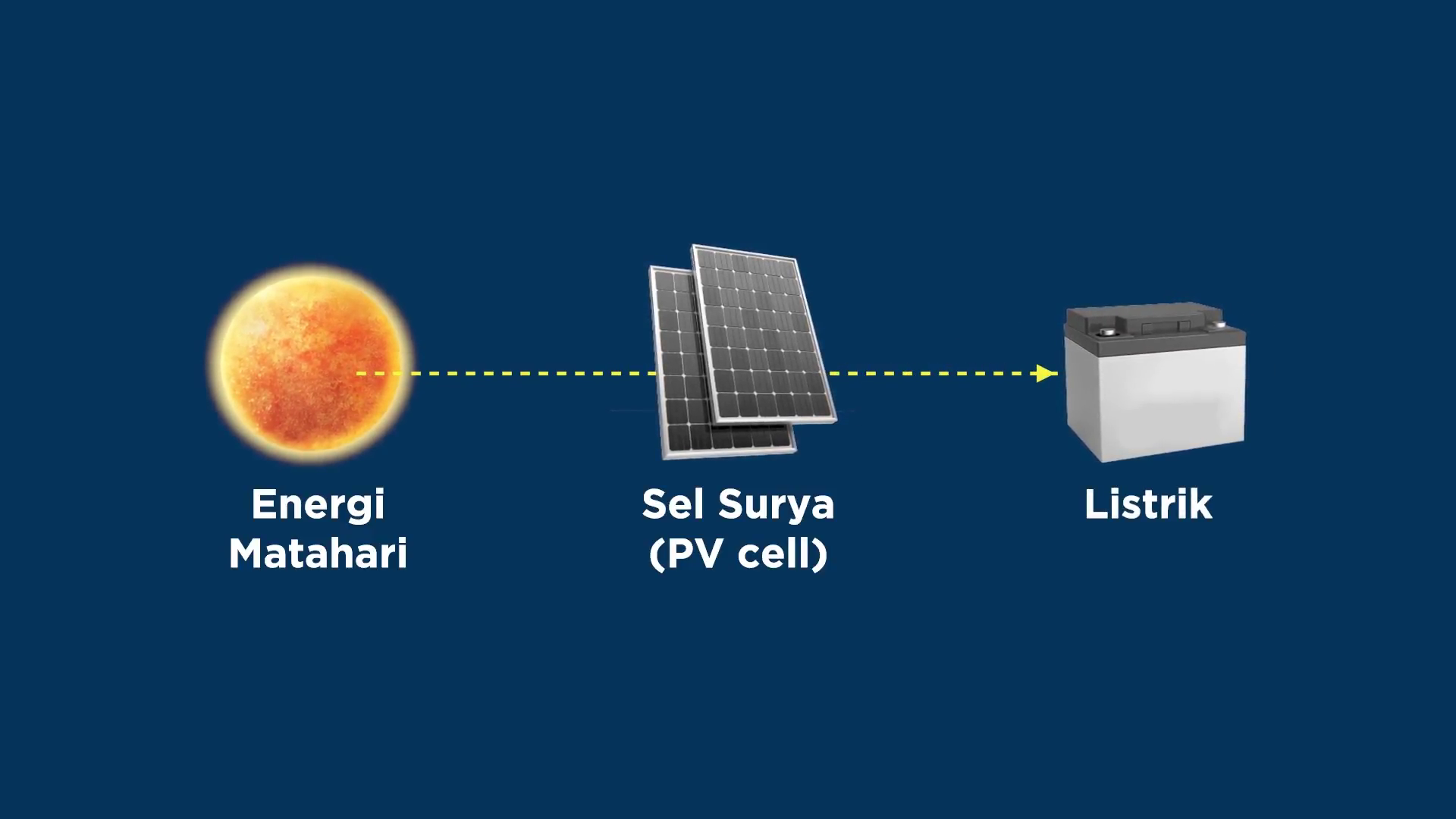
For example, we can insert keywords, statistics, or labels pointing to parts of a diagram that appear in sync with what the narrator is saying at that exact moment. Minimal text like this, combined with relevant icons and a clean layout, actually strengthens short-term memory retention without creating a clash in the audience's visual channel.
How effective this tactic is also depends heavily on the creator's judgment in knowing when to follow this rule and when to deliberately break it. The Modality Principle works best for material that's complex, abstract, and delivered at a fast pace. But once your learning video gets into complicated technical terms, mathematical formulas, programming code, or unfamiliar symbols that are hard to spell out by ear alone, having clear text on screen becomes essential.
The same applies if the video is meant for an audience that isn't a native speaker of the language used, or to ensure accessibility for viewers with hearing impairments. The key is to always let the design decision come back to the nature of the material and the specific needs of the audience who will be watching it.
Having worked on more than 1,000 learning multimedia projects, Monkey Melody understands that every company faces different challenges and goals. That's why we offer a tailored approach to ensure every video we create achieves its intended training objective. By combining the latest technology with a creative approach, we're ready to help your company meet the training challenges of the future.
More insights
Research on Interactive Video Among Biology Students
The use of video as a self-paced e-learning medium has become standard practice in corporate training programs and higher education.
The Science Behind Why Microlearning Works
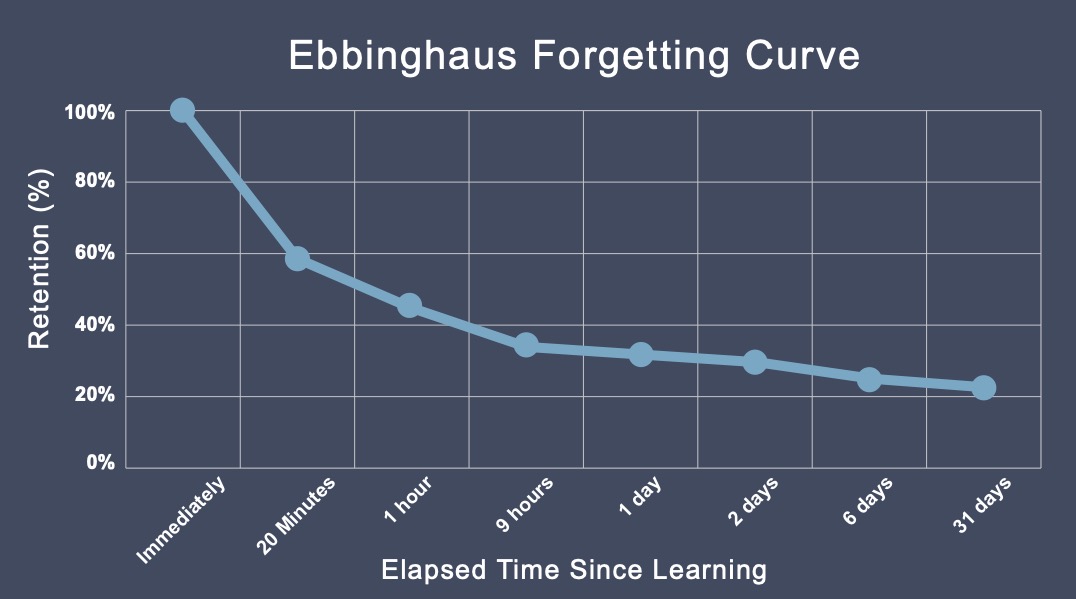
A single long training day often fails because it fights how the brain actually works — see how microlearning, the Forgetting Curve, and spaced repetition make material actually stick.

How AI Video Search Is Transforming Corporate L&D
Thousands of hours of training video pile up in your company's LMS, hard to search once a program ends — see how AI Video Search is changing the way L&D teams find specific moments buried in that dark data.
Want the short version, applied to your company?
Let's talk about what this means for you.
Get in touch