

Turns Out, Many Learning Videos Don't Apply Cognitive Theory
Does a video produced with eye-catching visuals and professional narration guarantee strong comprehension and retention? Turns out, not necessarily. It's entirely possible that once a training period ends…

Understanding How Learners' Brains Work
Does a video produced with eye-catching visuals and professional narration guarantee strong comprehension and retention? Turns out, not necessarily. It's entirely possible that once a training period ends, learners struggle to recall most of the material and apply it in their day-to-day work. This phenomenon comes up more and more in HR and Learning & Development circles, especially as companies are pushed to move faster while employees' time for learning keeps shrinking. So the question is: why doesn't a video that looks engaging necessarily translate into effective learning?
The answer has to do with how well a video's design aligns with the way the human brain actually works. This is where understanding and applying cognitive science becomes essential. In cognitive science, two main components are always at play: working memory and prior knowledge. Working memory can be thought of as the brain's mental desk, where information is temporarily held and processed. Its capacity is extremely limited — research shows that humans can only process around four to seven chunks of information at a time. When that desk gets too cluttered, learning slows down or stops altogether.
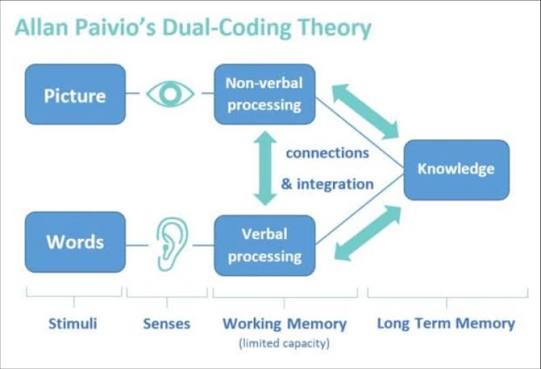
Richard Mayer, one of the key figures in multimedia learning theory, explains that the brain processes information through two main channels: visual and verbal. Problems arise when a video's design ignores this limitation. Long blocks of text appearing alongside overly dominant visual and audio elements often add unnecessary cognitive load. It's like a computer with limited RAM — running too many applications at once will inevitably slow the whole system down.
Memory is always interacting with prior knowledge stored in long-term memory, which functions like a personal library. The richer that collection, the easier it is for the brain to make sense of new information. This is why an expert can grasp complex material quickly while a novice feels overwhelmed. Experts are able to chunk — grouping small pieces of information into a single meaningful unit — which drastically reduces the load on working memory.
The problem is, many learning videos are designed as if every participant has the same level of prior knowledge. But when prior knowledge is too thin, the essential load required just to understand the core material can spike sharply. This is where the concept of pre-training becomes so important. By introducing key terms and concepts before the main material, we help clear space on the learner's mental desk. Interestingly, research also points to an expertise reversal effect, where a design that's highly helpful for beginners can actually feel disruptive to more experienced learners. That's a real challenge for L&D teams working with a mixed-experience audience.
From Theory to Screen
Understanding how the brain works is only the first step. The next challenge is translating that theory into video designs that are both practical and relevant to corporate needs. This is where the power of visuals comes into play. Studies show that using visuals appropriately can boost learning by several times compared to text alone. When words and images are combined correctly, the brain forms two memory representations at once, a process known as dual coding.
Mayer's multimedia learning principles offer practical guidance on how to make the most of this. The Coherence Principle, for instance, reminds us to be willing to cut irrelevant elements, no matter how visually appealing they might be. The Signaling Principle encourages the use of visual or verbal emphasis to direct learners' attention to key information. Meanwhile, the Segmenting Principle is highly relevant to the microlearning trend, where complex material is broken down into short, easily digestible video chunks.
Empirical evidence backs this approach up. Meta-analyses of dozens of studies show that videos designed around cognitive principles consistently improve comprehension and retention. One frequently cited case study comes from the education sector, where a math learning video that connected abstract concepts to everyday situations successfully boosted learners' confidence and understanding. In a corporate context, the same approach can be applied to leadership training, workplace safety, and new employee onboarding alike.
Looking ahead, AI technology is opening a new chapter in learning video design. AI can now analyze learning pace, preferences, and even estimate a learner's prior knowledge. With this data, video content can be adjusted in real time across various dimensions, such as the depth of material covered. Generative AI is also speeding up production, from script writing to storyboarding, making personalization far less difficult than it used to be.
On top of that, the neuroaesthetics approach is starting to gain attention for designing visuals that align with how the human brain responds neurologically. Color, composition, and motion are no longer chosen purely on design preference, but based on their impact on emotion and memory. When combined with immersive experiences like VR or AR, learning videos turn into simulations that let learners practice safely yet contextually, closely mirroring real experiences in the workplace.
Having completed more than 1,000 learning multimedia projects, Monkey Melody understands that every company faces different challenges and goals. That's why we offer a tailored approach to ensure every video we produce achieves its intended training objectives. By combining the latest technology with a creative approach, we're ready to help your company navigate the training challenges of the future.
More insights
Research on Interactive Video Among Biology Students
The use of video as a self-paced e-learning medium has become standard practice in corporate training programs and higher education.
The Science Behind Why Microlearning Works
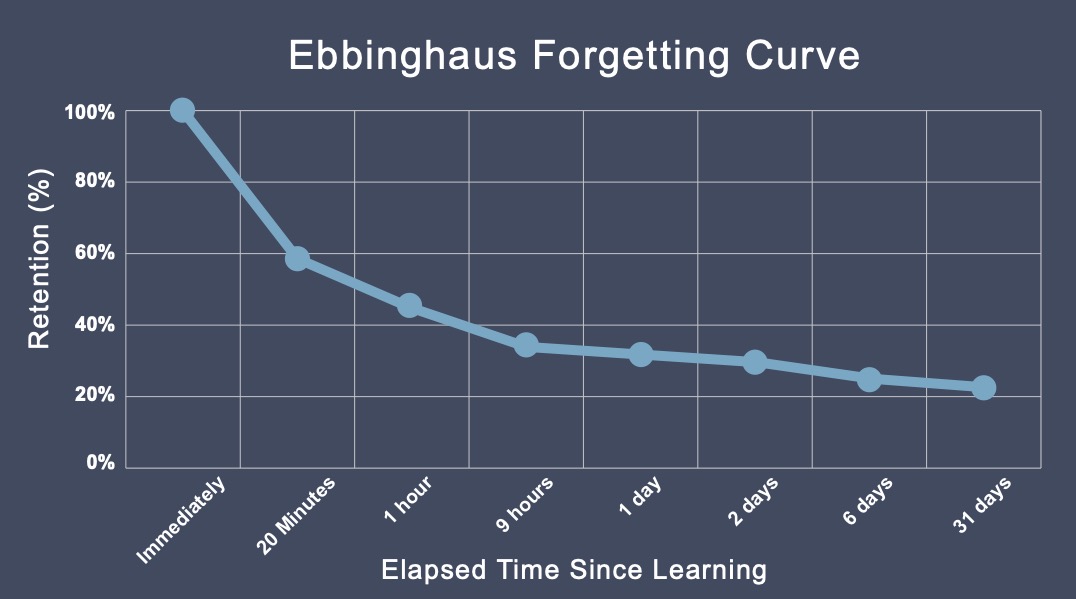
A single long training day often fails because it fights how the brain actually works — see how microlearning, the Forgetting Curve, and spaced repetition make material actually stick.
How AI Video Search Is Transforming Corporate L&D
Thousands of hours of training video pile up in your company's LMS, hard to search once a program ends — see how AI Video Search is changing the way L&D teams find specific moments buried in that dark data.
Want the short version, applied to your company?
Let's talk about what this means for you.
Get in touch